AI Helped Me Finally Start Reading the Classics

For years, I've been meaning to tap into timeless wisdom: reading classics like Sun Tzu's The Art of War, Marcus Aurelius's Meditations, Ferdowsi's Shahnaame, Seneca's letters… Books that have passed the test of time. Books that contain timeless wisdom, and ones that I had started and abandoned a few times.
This bothered me. How could I talk about strategy and philosophy in business conversations when I'd never actually finished Sun Tzu? The classics sat in my library collecting dust.
The Problem Wasn't Discipline
Every few months, I'd try again. Read a few pages of dense, annotated text. Get overwhelmed by scholarly footnotes or the lack of knowledge about the historical context. Abandon it. Repeat.
The books were not the problem. I was approaching them wrong.
Classic texts are not designed for how modern busy professionals actually learn. They're dense, disconnected from daily context, and demand uninterrupted focus that feels impossible between meetings, email, driving kids around to extracurriculars… What's worse is that dense history or historical texts are full of annotations, sidebars and references to other books or texts which makes it hard to follow the straightforward path of reading through a book.
In short, what I needed was not more willpower. I needed a better reading system.
Building My Personal Librarian
This past week, I decided to solve this problem the engineer's way: by building something!
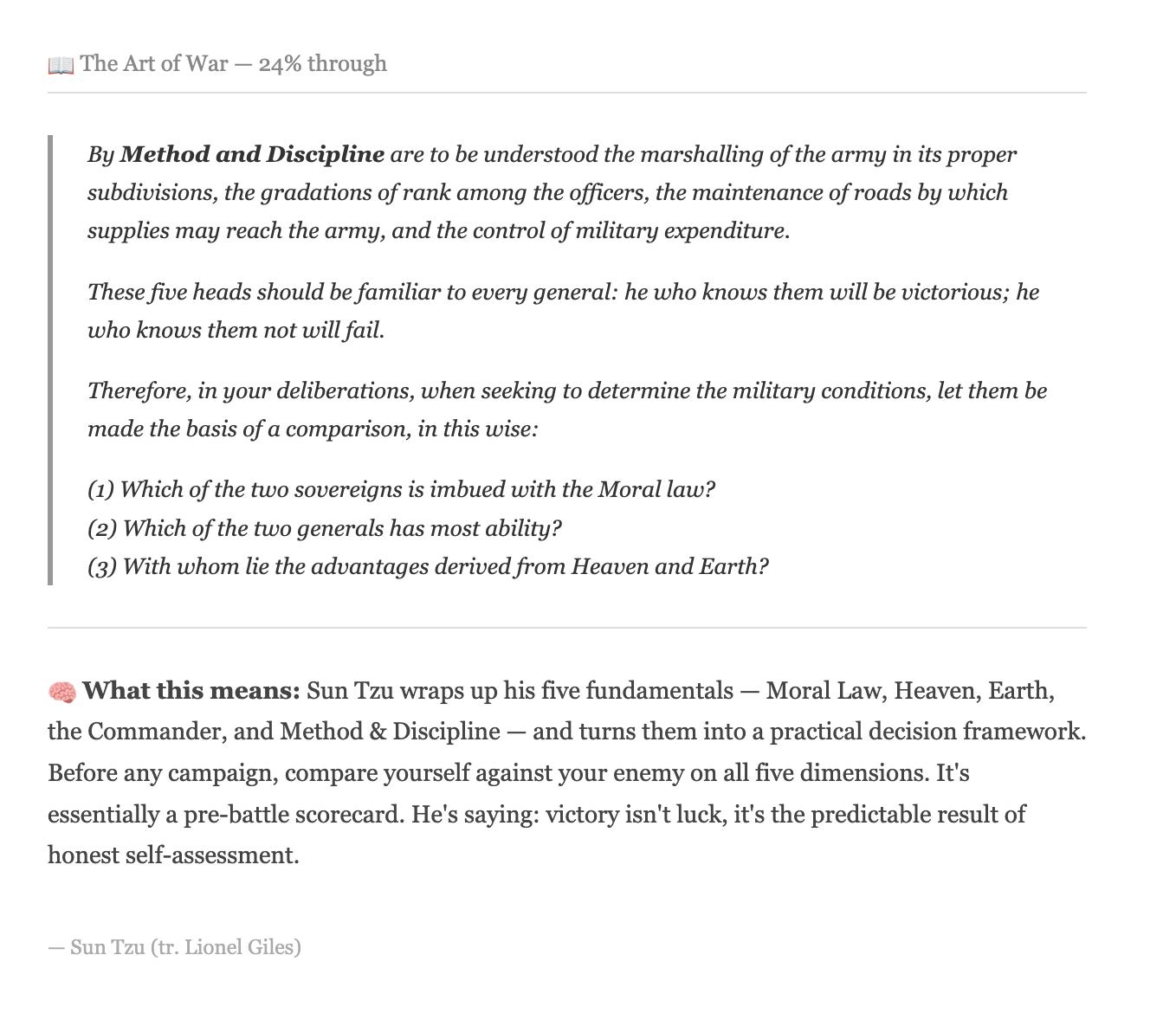
Using my personal AI assistant, Claw powered by OpenClaw, I created what I can only describe as a "personal librarian" that delivers classics to me in small, digestible pieces.
Here's how it works: Every weekday morning at 8:30 AM, my phone buzzes with the next chunk of whatever classic I'm working through. Not a reminder to read, but the actual content, pre-formatted and ready to absorb in 2–3 minutes during my commute.
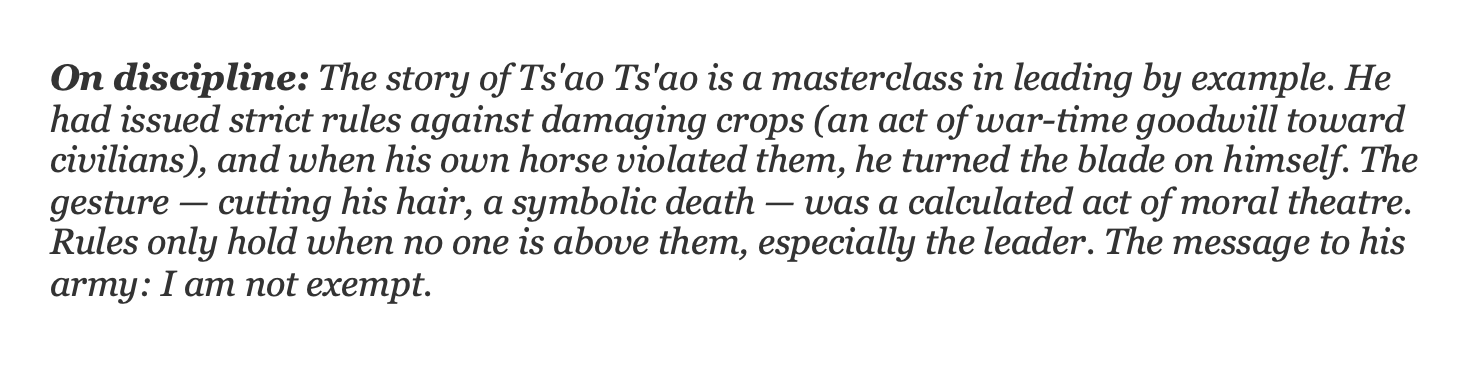
But here's the real unlock: the AI doesn't just deliver raw text. It interprets each passage, explains what it means in modern context, and shows me why it matters for business and life today.
The Results Surprised Me
A few days in, and I'm actually reading The Art of War. Not struggling through it—genuinely absorbing it.
A few things clicked. First, there's zero decisions required. The book shows up whether I remember it or not. Consistency becomes automatic. I make bite-sized progress, 800 characters or so at a time, it takes 2–3 minutes to read. There's no commitment paralysis. Finally, there's tremendous contextual learning. Every chunk arrives pre-interpreted, so ancient military strategy connects directly to modern challenges, negotiations, competition, leadership.
Looking back, this small project taught me something important: sometimes the barrier to learning isn't time or desire—it's the absence of infrastructure that makes good habits inevitable.
Why This Matters Beyond Books
This experience reinforced what we've been discovering in our AI work: the real power of intelligent agents isn't just answering questions on demand. It is proactive AI that maintains rhythm for you.
Most AI tools up until now wait for you to engage; they are reactive. But proactive agents that schedule, deliver, track, and adapt? They change the game entirely.
Imagine: AI that drip-feeds you research papers in your field every Friday. Or delivers Spanish vocabulary during lunch. Or surfaces daily creative prompts at your peak energy time.
Not because you remembered to check an app. Because the infrastructure makes learning inevitable.
What's Next
Marcus Aurelius is queued up after I finish Sun Tzu. But more importantly, I'm thinking about what other areas of life could benefit from this "proactive agent" pattern: language learning, staying current on research, even writing practice.
The common thread? Consistency matters more than intensity. And well-designed AI systems can maintain consistency better than human willpower alone.
Sometimes you just need better infrastructure. And maybe a librarian who never forgets to show up.